
What the bedroom count misses
A bedroom holds a bed, a wardrobe and a chest of drawers, call it a predictable parcel of furniture. That's why the industry uses it. But walk any long-held property around Terrey Hills or Duffys Forest and count where the volume actually lives:
| Building | What's usually in it | What it does to the day |
|---|---|---|
| Double or deep garage | Bikes, tools, camping gear, the overflow of every cupboard in the house, often a second fridge | Adds roughly a room's worth of loading, mostly awkward loose items that pack slowly |
| Garden shed | Mowers, tools, chemicals, stakes and pots | Small volume, slow handling, plus the fuel-and-chemical sort covered in the shed guide |
| Machinery or big shed | Workbenches, racking, machinery, timber, trailers' worth of stored history | Can equal the entire house for loading time, and it's usually furthest from the truck |
| Studio or granny flat | A second small household: furniture, kitchenware, sometimes a business | Adds both volume and its own carry, effectively a second, smaller move |
| Stable and tack room | Saddles, rugs, feed bins, float gear | Careful crating, coordinated with your horse transport's schedule |
A "three-bedroom move" with a big shed, a studio and a deep garage is a five-or-six-room move wearing a three-bedroom label. Quote it off the label and the day cannot go well, whoever's truck is in the drive.
The second number: the carry
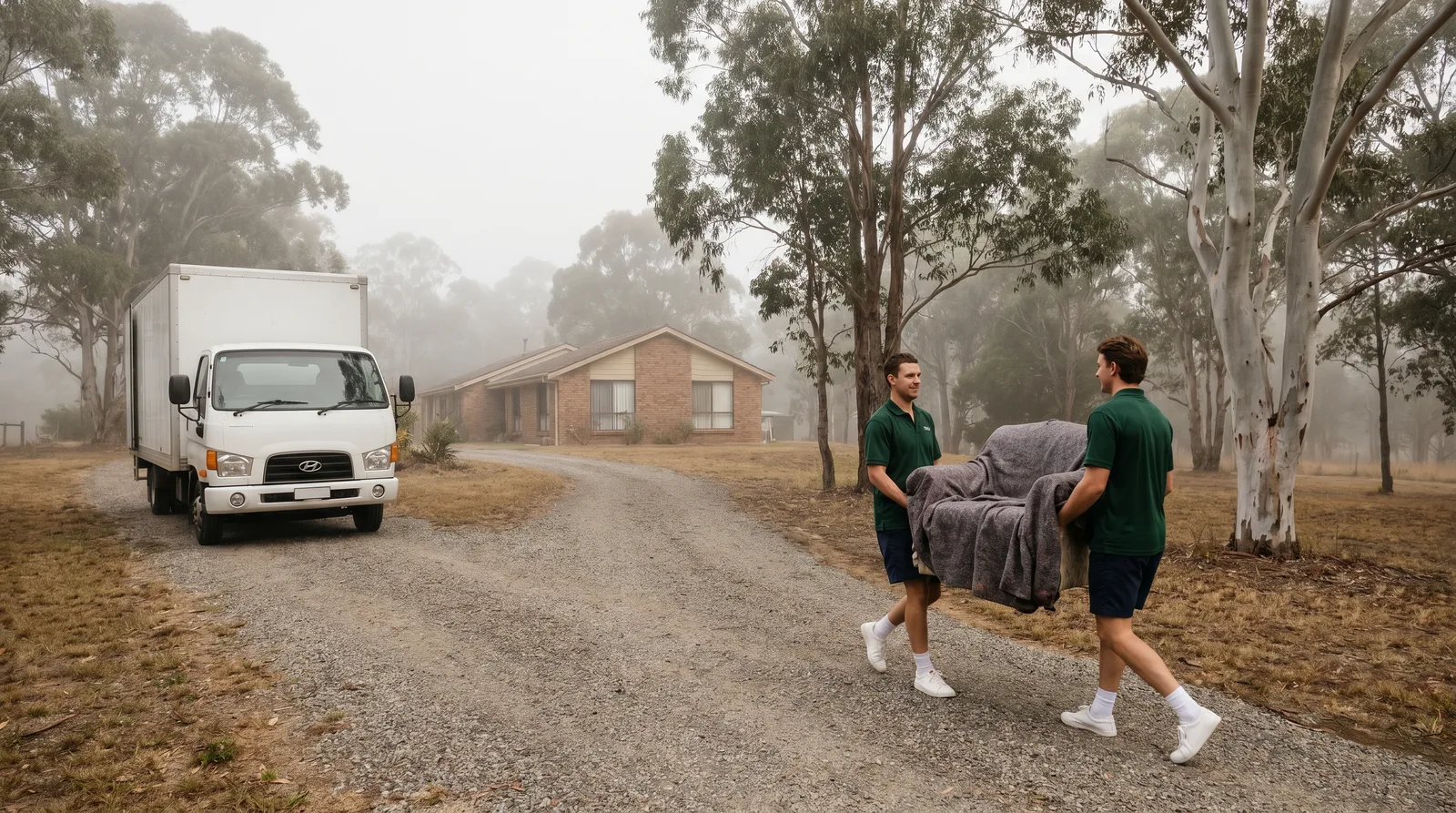
Volume is only half an acreage quote. The other half is distance. On a court block in Belrose the truck parks a few steps from the door. On acreage, gates, trees, soft ground and turning room decide where the truck stands, and every metre between truck and door is walked, both ways, by someone carrying your furniture.
That's not a complaint, it's arithmetic. A long carry adds a fixed cost to every single item, so the same houseful takes noticeably longer from a far-set house than a near one. We plan it two ways: stand the truck as close as the block safely allows, and size the crew so the truck is never waiting on the walkers. The detail lives in the truck access guide.
How the count becomes a crew
Our whole price list is three hourly rates: $250 for two movers and a truck, $350 for three movers, $500 for four movers and two trucks. The quote conversation is really one question: which crew finishes your property in the fewest sensible hours?
- Two movers suit a compact list with the truck at the door: units, townhouses, small houses.
- Three movers is the workhorse for most houses, and for smaller homes that carry a long walk, the third set of hands keeps the truck loading continuously.
- Four movers and two trucks is the property crew: one team works the outbuildings while the other wraps the house, and the second truck saves a return trip that a spread block would otherwise force.
The pattern worth knowing: on big jobs the bigger crew usually wins on total cost, not just speed, because the hourly difference is smaller than the hours it removes. We'll show you that arithmetic honestly in where the hours go.
Run your own first pass
You can do a useful version of our walk in ten minutes, no removalist required:
- Walk the block gate-first, the way a truck experiences it. Note the drive surface, the gate width, and where a truck could realistically stand.
- Open every building and be honest about fullness. "Half a shed" is a real unit of measurement, we use it constantly.
- Pace the distance from the truck spot to the furthest door you'll be emptying.
- Flag the specials: piano, machinery, anything that took two strong friends to get in.
Or let the site do it: the Property Walk asks exactly these questions, draws your block while you answer, and sends the whole sheet with your enquiry so the callback starts with the property already on the table.
Quote the house and you'll meet the shed on moving day. Quote the property and the day just runs.The rule we brief every crew with